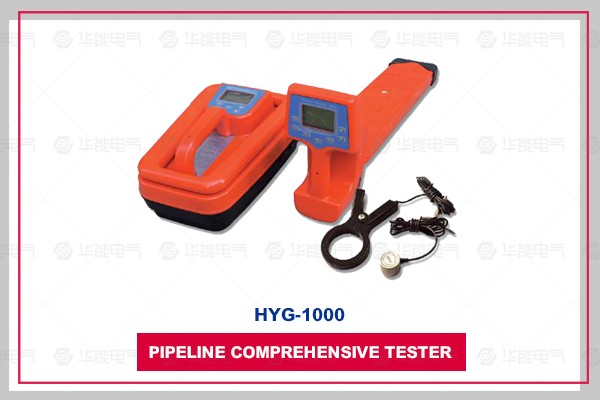
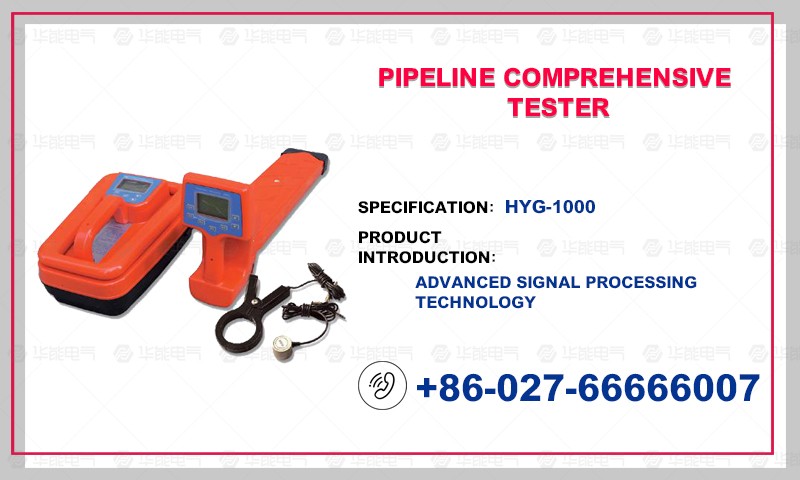
1. Using advanced signal processing technology and the latest integrated circuit components to achieve excellent test performance.
2. Various transmission modes of measurement signals:
(1) Injection method: for pipelines with injection points.
(2) Clamp method: a section of pipeline is exposed for the purpose of clamping.
(3) Induction method: for pipelines without injection point or exposure.
3. Various measurement frequencies: 480Hz, 7.7KHz, 31KHz and 61KHz active frequencies and 50Hz passive frequencies of power cables; users can choose according to different environments (if special measurement frequencies are needed, please indicate in the order contract).
4. Different Positioning Modes and functions to improve test efficiency:
(1) Peak mode: the location of routing is determined by measuring the maximum of the signal.
(2) Valley mode: the location of routing is determined by measuring the minimum value of the signal.
(3) Routing orientation: direct and rapid indication of the direction of routing.
(4) Insulation Fault Finding (FF): Find and locate the fault points caused by the deterioration of pipeline insulation.
(5) Stethoscope: The stethoscope recognizes the pipeline loaded by the signal from many pipelines through the stethoscope head.
5. Auxiliary function:
(1) Receiving Gain Auto-regulation: Auto-regulation of the receiver's gain so that the receiver is in an optimal state, eliminating the tedious manual adjustment.
(2) Acoustic function: The tone change of the receiver through the loudspeaker can directly reflect the measured signal size.
(3) Pipeline status detection: When the transmitter is in injection mode, it first detects the insulation resistance and residual voltage of the pipeline, and then applies the signal to the target pipeline. When the insulation resistance of the pipeline is small (near to ground short circuit), the transmitter will automatically withdraw from the mode. When the residual voltage is large, the transmitter will warn. The operator should immediately stop loading the signal and close the transmitter.
(4) Battery power detection: Real-time detection of battery power, when the power is low to the protection value, it will send an alarm and shut down automatically.
(5) Power-saving function: After the transmitter starts 30 seconds or so without pressing other keys and the receiver starts operation, if the other keys are not pressed in 10 minutes or so, the machine will automatically shut down to save battery power.